When Tim Mouat looked at his existing fertiliser bin, the issue was practical rather than dramatic. The timber sides on the old bin needed replacing, but the concrete pad underneath was still there and still useful. The job was not about starting again. It was about finding a way to work with what was already on site and end up with something that would last.
That is where Interbloc came into the picture. Instead of a full rebuild, the project became a careful upgrade: reuse the existing pad, simplify the build, and create a bin that would do the job now while still leaving options open for the future.
Starting with What Was Already There
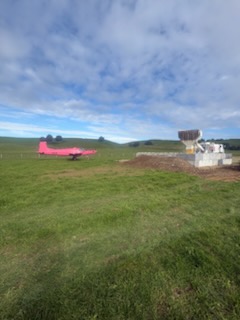
The challenge was straightforward. As Tim explained, “We needed to replace our wooden sides on our old fert bin and use existing concrete pad.”
That one line captures the shape of the project. The need was not for something flashy or overbuilt. It was for a solution that made sense on a working site: practical, durable, and able to fit the conditions already in place.
Using the existing concrete pad mattered. It meant avoiding major construction and making better use of what was already there. In a project like this, that is often where the real value sits.
Why Interbloc Made Sense
Tim’s reason for choosing Envirocon was simple: “Uniformed blocks that fitted together nicely.”
There is a lot in that observation. For a project like this, neat fit and consistency are not small details. They affect how easily the structure goes together, how the finished bin looks, and how confident the customer can feel about the result.
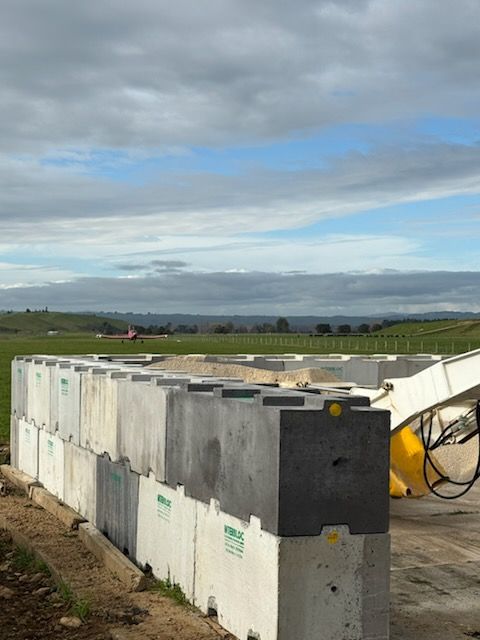
Interbloc suited the job because it worked with the site rather than against it. The modular format made it possible to adapt the structure to the existing pad, while the uniform block system helped keep the build straightforward.
Seeing the End Result Before the Build Started
One of the most useful parts of the project was the design process. Tim put it plainly: “Been able to have a visual design helped with knowing what the end product would look like.”
That visual step helped turn an idea into something more concrete. Instead of trying to picture the finished bin from measurements and conversation alone, Tim could see where the project was heading before installation began.
Just as important was the support around that process. Tim described the experience this way: “Envirocon were easier to get hold of and available on phone when needed throughout the design process.”
That kind of accessibility matters. On projects like this, progress often depends on being able to ask a question, check a detail, and keep moving.
A Straightforward Installation
When it came time to install the bin, the process was uncomplicated. Tim’s description was direct: “Installation was simple and a quick one look at the design picture made it an easy process.”
That says a lot about how the system worked in practice. The design gave a clear reference point, and the modular block format kept the build manageable.
For a working farm or rural site, simplicity is part of the value. The easier a structure is to understand and assemble, the less disruption there is around the build itself.
What Mattered Most Once It Was Finished
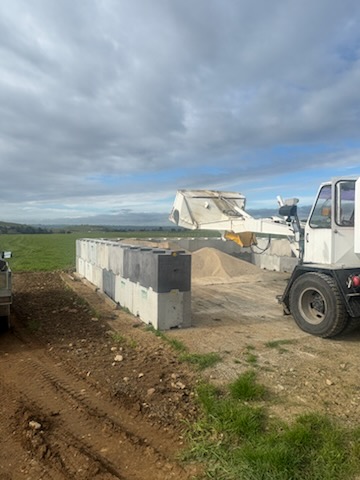
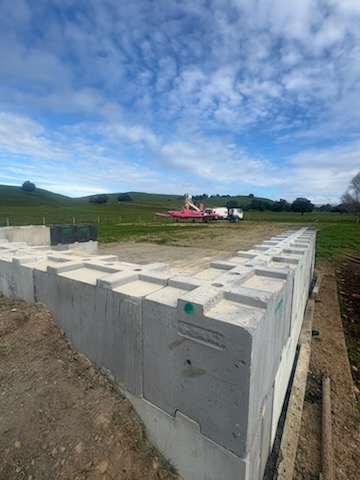
After completion, the biggest benefit was not abstract. It was immediate and practical. In Tim’s words, “The major benifit for us was utilising our existing concrete pad without any major construction.”
That outcome brings the whole project back to its starting point. The goal was to upgrade the bin without unnecessary extra work, and that is exactly what happened.
Rather than demolishing and rebuilding from scratch, the project made better use of the site as it stood. The result was a more durable structure, built around an existing asset that still had value.
Built for Now, Flexible for Later
What stands out most in Tim’s feedback is not only how the bin works today, but how it could change later. As he put it: “The best part about interblock is if in the future we choose to add a sliding roof we can simply buy some more blocks and move about our existing block to suit.”
That long view is a big part of what makes modular systems useful. Needs change over time. A site that works one way today may need to work differently later. A structure that can be adjusted, added to, or reworked offers a different kind of value than one that is fixed from day one.
In this case, the fertiliser bin solved the immediate need while still leaving room for the next version of the site.
A Positive Experience Overall
When Tim reflected on the experience as a whole, the comments were practical and unforced. He would recommend Envirocon to others because they were “easy to deal with in the design and logistics,” and because the “uniformed blocks look good.”
That combination is worth noting. The project was not only functional. It also ended with a finished result that looked tidy and well put together.
Conclusion
This was a modest project with a clear purpose: replace the old timber-sided bin, keep the existing pad, and create something more durable in its place. What makes it a good story is that the outcome stayed close to that original need.
The Interbloc system helped turn an ageing structure into something simpler, neater, and more adaptable. It worked with the existing site, made installation easier to manage, and left the door open for future changes such as a sliding roof.
For Tim, the value was practical from start to finish. The existing pad stayed in use. The installation was straightforward. And the finished bin did what it needed to do without making the project more complicated than it had to be.