OVERVIEW
The Owenga ramp project on the Chatham Islands presented a unique set of engineering and logistical challenges. Located at one of New Zealand’s most remote inhabited outposts - some 800 kilometres east of the South Island - the site demanded a construction solution that could be delivered with minimal on-
site resources, withstand a harsh marine tidal environment, and be installed with precision under challenging tidal conditions.
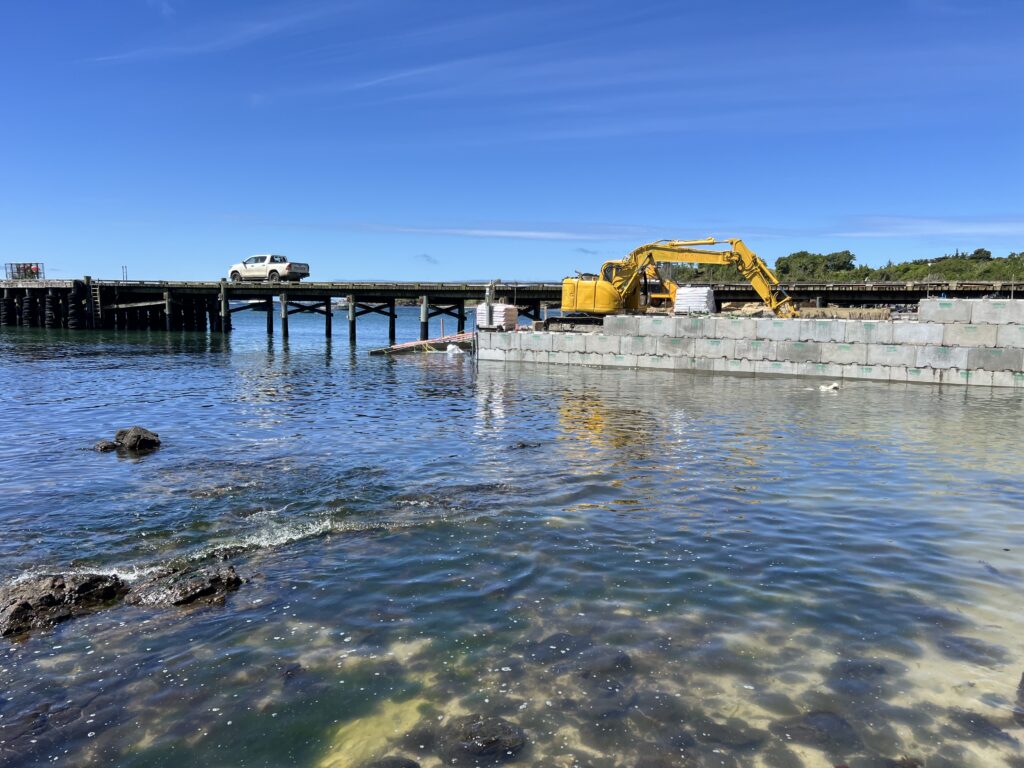
Hunter Civil Ltd, appointed as contractor and led on-site by Project Manager Jess Baker, selected Interbloc precast concrete blocks as the primary structural solution. The result was a successful ramp installation that demonstrated the adaptability of the Interbloc system in one of the most demanding environments imaginable.
THE CHALLENGE
The Chatham Islands presented a combination of constraints that ruled out conventional construction methods from the outset:
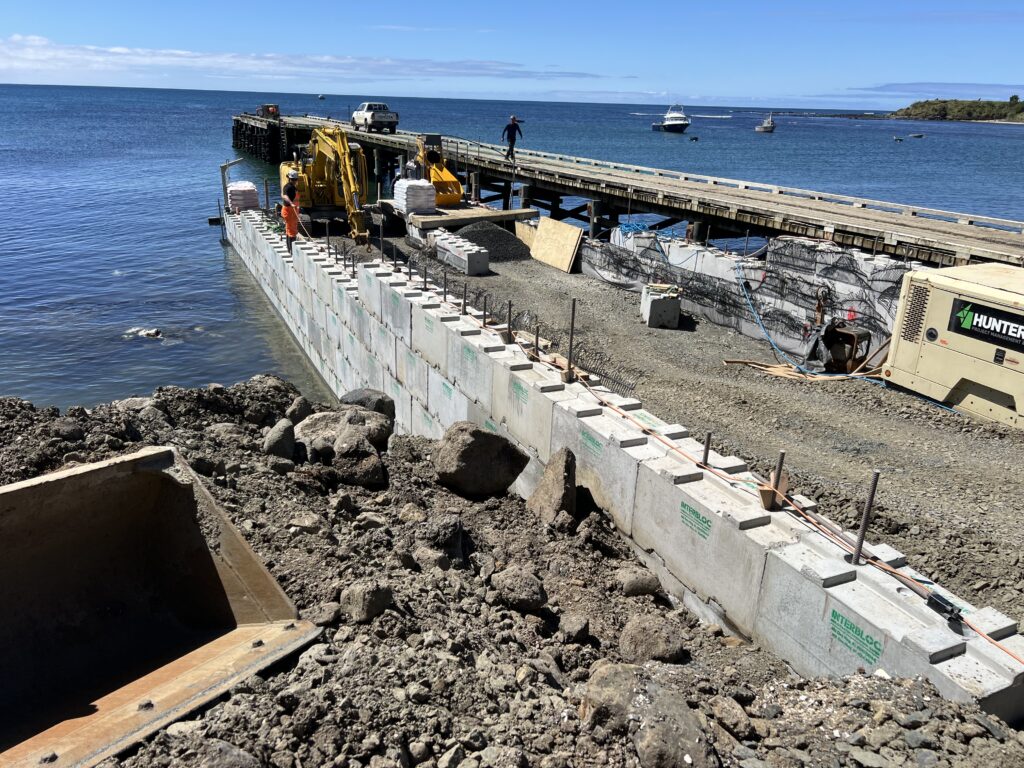
- No concrete plant on the island - all concrete would have required hand mixing on-site, making quality control for a structural marine application extremely difficult.
- No viable temporary formwork for in-situ concrete pours directly into the sea, which the original design had specified.
- Tidal working windows restricted available construction time, requiring the team to plan placement and drilling activities around tide schedules.
- Significant ocean currents at the site made precise block placement in the deeper sections of the ramp challenging.
- Remote supply chain logistics meant all materials had to be transported via Timaru and then by sea, passing through multiple handling stages.
Faced with these constraints, the project team worked closely with the designer to develop a revised construction methodology. The solution centred on the use of Interbloc® precast concrete blocks — a decision that addressed each of the site’s key limitations in a single step.
THE SOLUTION
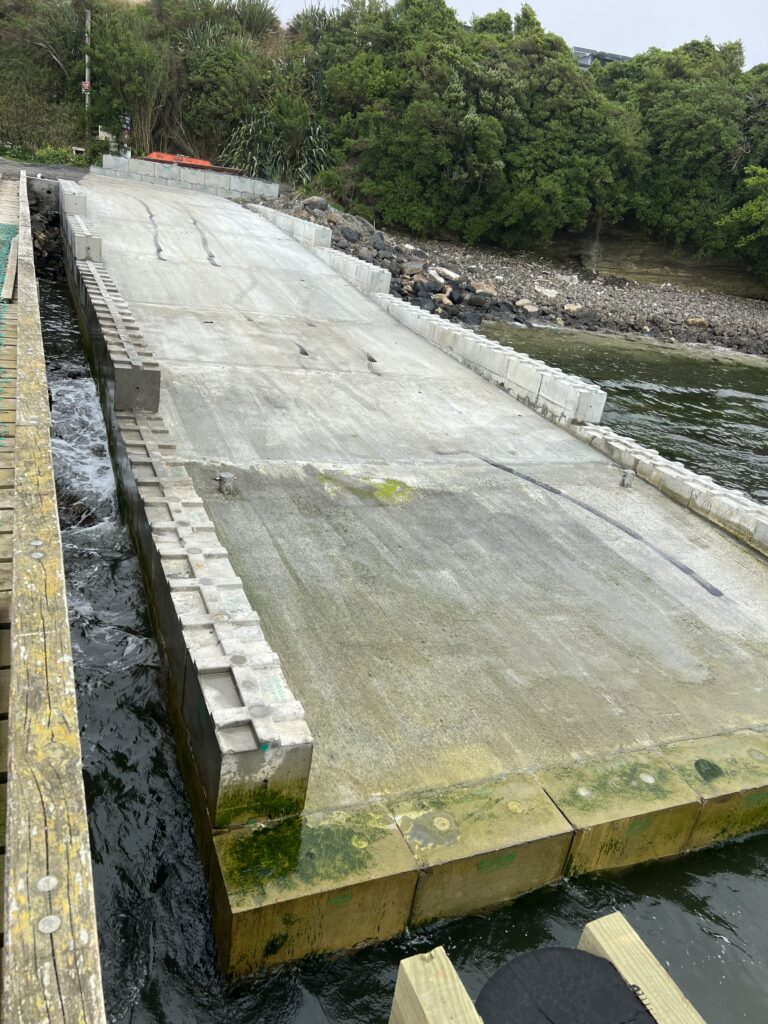
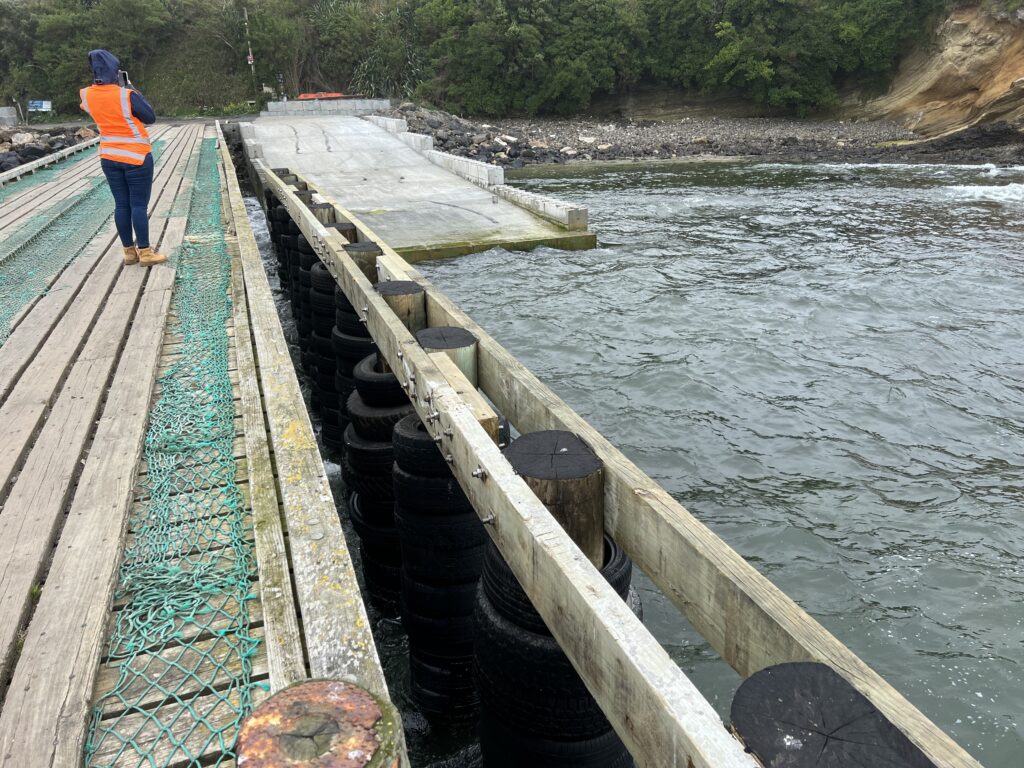
By switching from in-situ concrete to Interbloc precast units, the project immediately eliminated the quality risk associated with hand-mixed on-site concrete. Each block was cast in a controlled factory environment before being shipped to the island, ensuring structural consistency that would have been impossible to achieve through site mixing.
FACTORY-CONTROLLED QUALITY
ANCHOR INTEGRATION
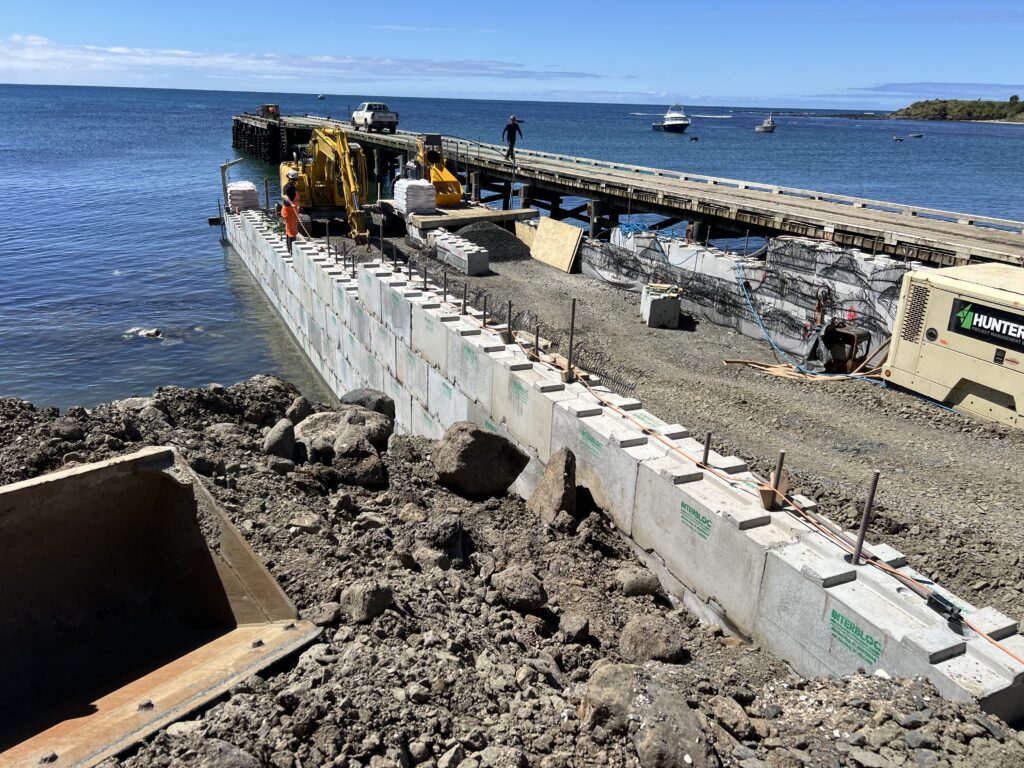
A critical feature of the Interbloc system that proved invaluable on this project was the pre-formed hollow core running through each block. Once the blocks were positioned along the ramp alignment, the team drilled through these hollow inserts directly into the bedrock below, then grouted anchors into the rock. This locked the entire ramp structure firmly to the seabed, providing the structural resistance needed in a dynamic tidal and wave environment. Without the pre-formed void, the team would have faced the time-consuming and costly task of drilling through the full depth of solid concrete block before reaching the rock. The Interbloc® design effectively removed this barrier entirely.
TIDAL SCHEDULING
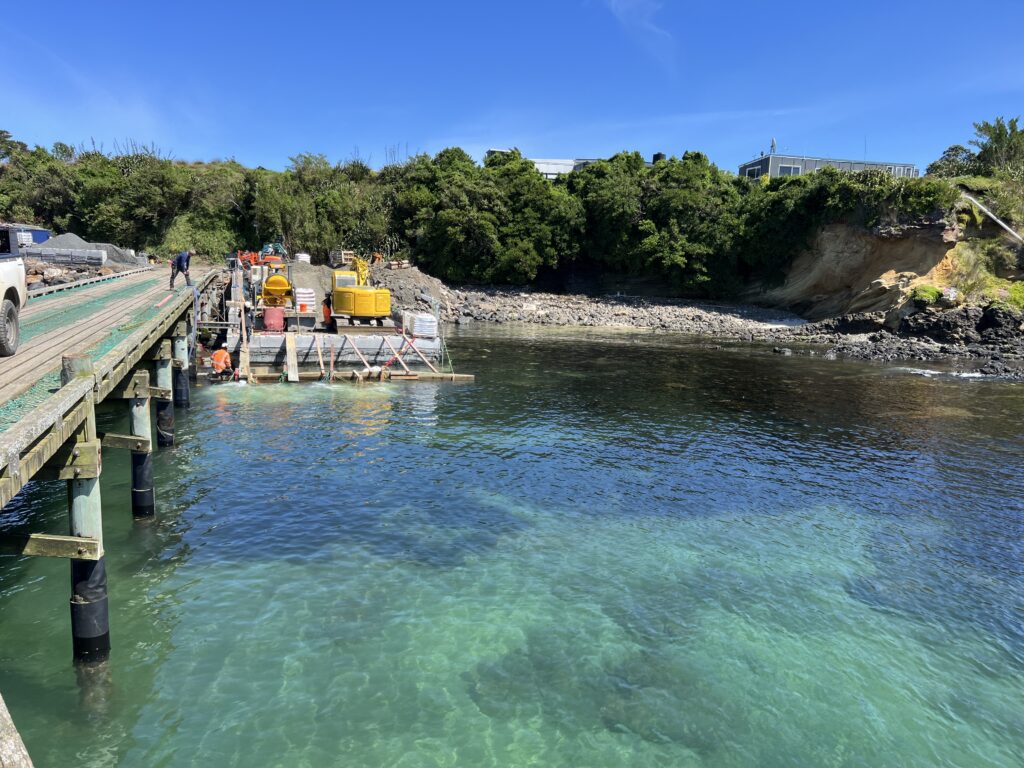
The Hunter Civil team strategically timed the installation to coincide with spring tides, maximising the duration of low-tide working windows. The crew worked flexible hours around the tidal schedule to make the most of each available access period. In the deeper sections of the ramp where ocean currents were strongest, a minor design adaptation - slightly shortening the ramp - allowed the project to proceed safely without compromising structural intent.
GROUTING IN WET CONDITIONS
Drilling and grouting in a tidal zone inevitably means working with wet anchor holes. The team managed this effectively by blowing out excess water from the drilled holes before grouting, then trimming the grout in from the bottom so that residual water was displaced upward and out as the grout filled the void. This technique ensured full bond without the need for costly dewatering operations.
SUPPLY CHAIN & LOGISTICS
Getting the Interbloc units to the Chatham Islands was itself a logistical achievement. Blocks were dispatched from the mainland via Timaru, then transported by sea to the island - passing through multiple handling stages along the way. The inherent durability of the precast concrete product meant the blocks arrived on-site in full working condition despite the extended and physically demanding supply chain.
OUTCOME
The Owenga ramp was completed successfully in 2024. The finished structure provides a durable, rock-anchored ramp suitable for use in a challenging marine tidal environment. The project stands as a strong example of how the Interbloc system can be adapted to meet the demands of remote, resource-constrained infrastructure projects where conventional construction methods are simply not viable.
“Once you got the system going, the blocks locked together and were relatively easy to work with. The pre-formed holes in the blocks were essential - without them we would have been drilling through the full block as well as the rock, which would have added significant time to the job.”
Jess Baker, Project Manager — Hunter Civil Ltd
KEY BENEFITS DEMONSTRATED
- Factory-quality concrete: Eliminated on-site quality risk where no batching plant existed.
- Pre-formed anchor voids: Enabled through-block drilling and rock grouting without drilling through solid concrete.
- Rapid installation: Interlocking system allowed efficient block placement with minimal plant.
- Structural versatility: Blocks used to form a bunded ramp structure, backfilled in sections with geogrid for mass retention.
- Supply chain resilience: Heavy precast units withstood multi-stage handling from mainland to remote island destination.
- Tidal zone performance: Effective grouting method developed for wet anchor holes without dewatering.
ABOUT INTERBLOC
Interbloc® is a New Zealand-manufactured precast concrete block system designed for retaining walls, bunds, ramps, and heavy-duty civil applications. The Interbloc system combines ease of installation with engineering-grade structural performance, making it the preferred choice for projects where speed, quality, and adaptability are critical. Available as a standard off-the-shelf product or custom-manufactured to project specifications - including geogrid integration and specialty concrete mixes - Interbloc is at work on infrastructure projects across New Zealand and the Pacific.
For more information visit interbloc.co.nz