HOW A HOME-GROWN EARTHWORKS PROJECT TURNED INTO A LESSON IN BUILDING SOMETHING BEAUTIFUL
Every good build starts with a problem. On a rural property in Matakana, the problem was three metres of raw, freshly cut earth, left behind after Peter Binsted carved out a platform for a new implement shed. It was solid ground, but bare and exposed, the kind of bank that keeps a landowner up at night wondering what happens in the next big downpour.
Peter wasn't a stranger to this kind of challenge. As a civil engineer, he'd seen plenty of retaining walls in his career, some that worked, and some that didn't. This time, the wall was his own, and he wanted two things from it: hold the ground, and look like it belonged there. A grey concrete slab wasn't going to cut it. He wanted something that looked like it had always been part of the landscape.
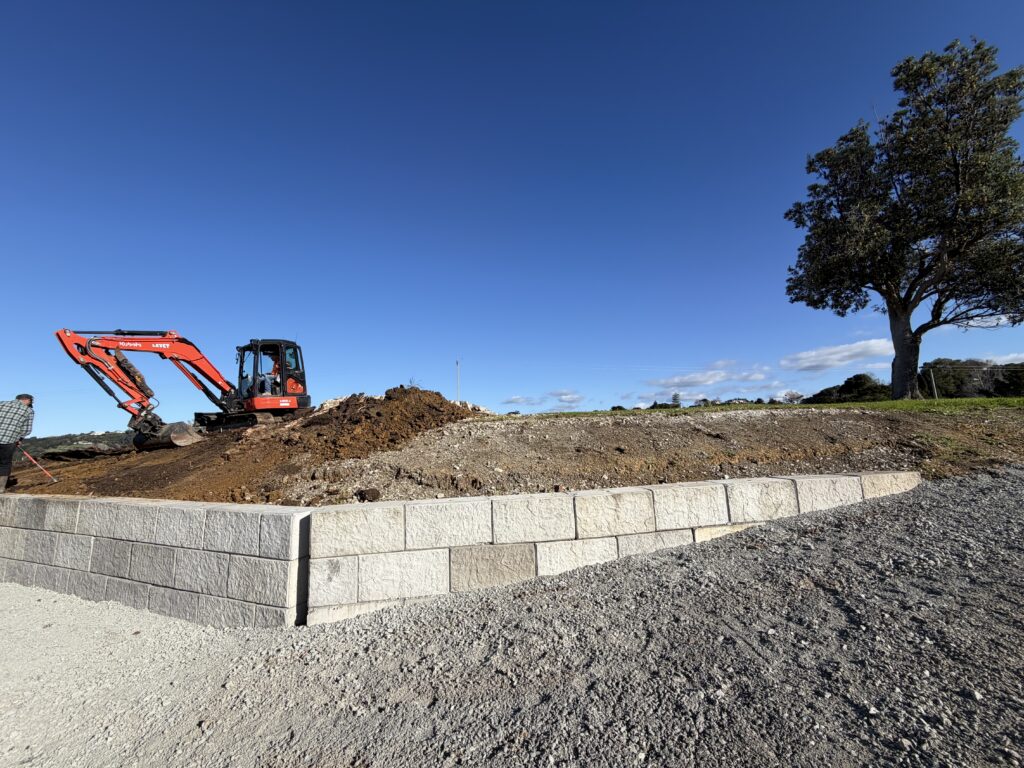
That search led him to Stonebloc, Envirocon's precast retaining wall system, built to look like hand-laid stone without the hand-laying. What won him over wasn't a sales pitch. It was the blocks themselves. Each one locks into the next like a giant, precisely engineered puzzle piece, so a wall goes up straight, true, and fast, without the fuss of mortar, string lines, or second-guessing. Add in the price and the finished look, and the choice made itself.
From the first phone call to the delivery truck pulling up the driveway, Peter found the whole experience with Envirocon refreshingly easy. Much of that came down to Ajisha Ann Chacko, the Envirocon® business development manager who worked with him from initial enquiry through to delivery. No chasing down answers, no waiting around wondering. Just a straightforward process that let Peter get on with the part he actually enjoyed: building.
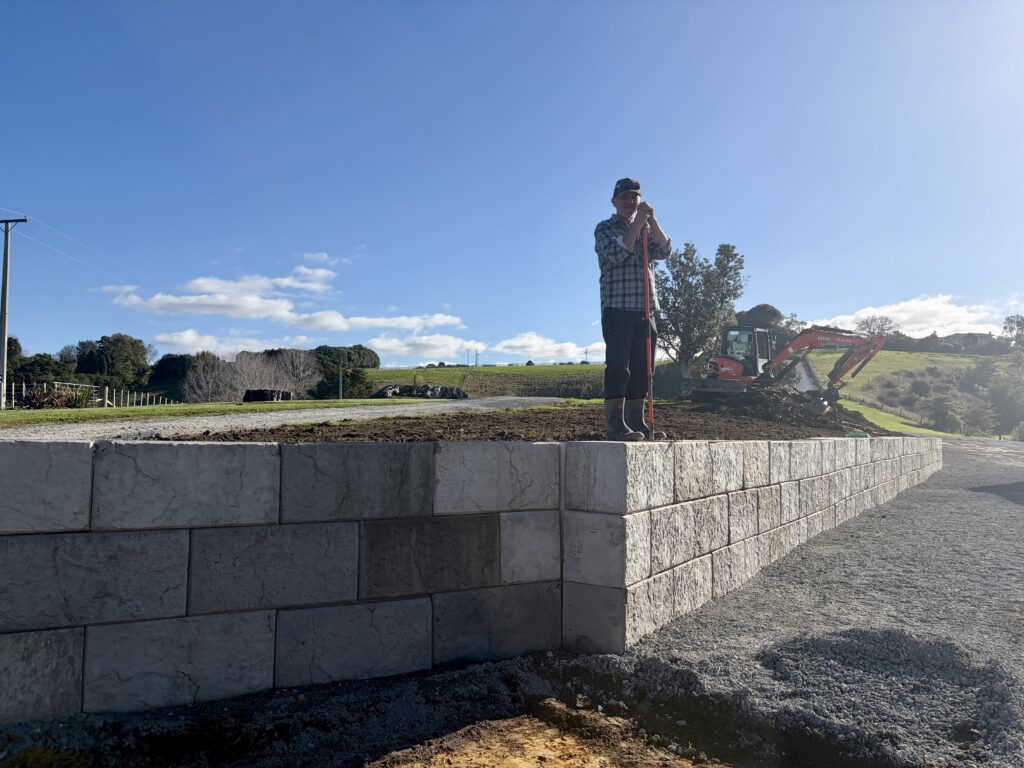
And building it, he did. As any good tradesperson will tell you, the real skill in a wall like this isn't in the tenth row, it's in the first. Get the very first course sitting level, straight, and square, and the rest of the wall practically builds itself. He leaned each block back a touch as he went, giving the wall a bit of a shoulder to lean into once the soil behind it was backfilled and doing its best to push forward. His advice to anyone tackling a similar job: keep it to three rows high, and let the wall do what it's good at.
The result speaks for itself. What was once a raw scar of cut earth is now a clean, textured stone wall that looks like it's been there for decades, not weeks. It holds the bank exactly as it should, and it turned a practical necessity into something Peter is genuinely proud to look at every day.
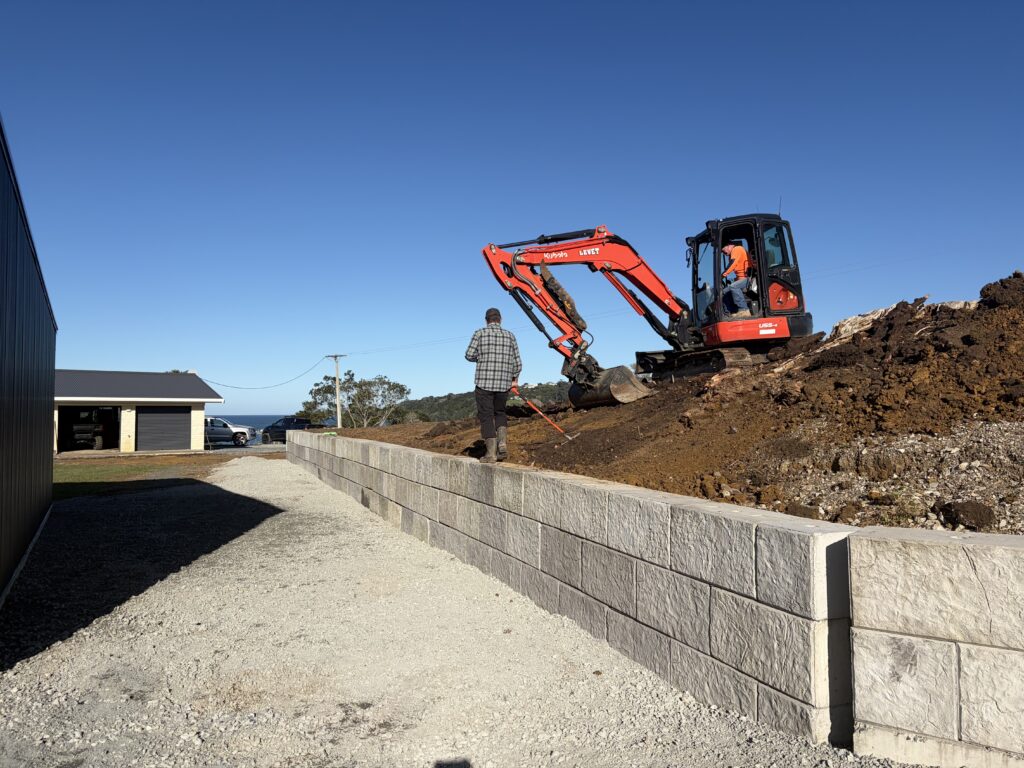
Ask him whether he'd recommend Stonebloc® to someone else facing the same problem, and there's no hesitation. Easy to build, easy on the budget, and easy on the eye, in his words, that's a combination hard to beat.
It's a small project in the scheme of things, one wall on one rural block. But it's exactly the kind of story Stonebloc was built for: turning an everyday earthworks problem into a lasting feature, block by interlocking block.